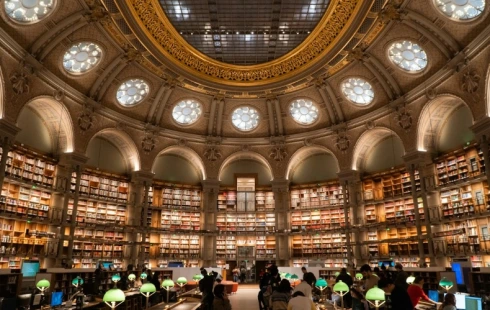
 The Bibliothèque nationale de France (BNF) has opened a captivating exhibition featuring an extraordinary selection of Japanese photographs documenting the journey from the aftermath of the nuclear trauma to the serene minimalism of contemporary art. This remarkable display, which began in late October 2023, presents 250 prints that span from the post-war period to the present day, offering a unique insight into the cultural and artistic evolution of Japan.

Binance hit by major cyberattack affecting $6.3 billion in cryptocurrency
Section: Business
This exhibition is a testament to the BNF's decades-long collection of Japanese photography, a project that began as early as the late 1960s. The institution has meticulously gathered a range of images that not only depict the historical and societal transformations of Japan but also highlight the artistic innovations within the photographic medium. The selected works represent various themes, from the intense political and social realities of the past decades to the more recent explorations into aesthetics and abstraction.
Viewers of the exhibition are offered an opportunity to explore the profound impact of historical events on Japanese society and the ways that photographers have sought to capture and interpret these changes. The collection delves into the visual narratives of the post-war era, showcasing the resilience and creativity that emerged during a time of recovery and rebuilding. Beyond this, visitors are guided through the diverse styles and techniques that have defined Japanese photography over the years.
The post-war period in Japan was marked by the daunting challenge of rebuilding after the devastating effects of nuclear attacks. This era produced a generation of photographers who turned their lenses towards the scars left by war, as well as the rapid modernization that followed. The exhibition includes poignant images that reflect the nuclear trauma, showing both the physical destruction and the societal healing that ensued.
As the exhibition progresses, it transitions into more contemporary themes, with photographers exploring the interplay between technology, landscape, and culture. Minimalism, a significant movement in Japanese art, is particularly highlighted, with works capturing the essence of this aesthetic through photography. These images often strip away superfluous details to focus on form, light, and space, creating serene and thought-provoking compositions.
The exhibition has been well-received by art enthusiasts and critics, who praise the BNF for its comprehensive and insightful display of Japanese photographic art. It has become a must-visit for those interested in understanding the multifaceted history and evolution of this art form in Japan. By presenting such a wide array of works, the BNF not only honors the artistic achievements of individual photographers but also contextualizes their contributions within larger cultural narratives.
In addition to the visual experience, the exhibition provides educational resources and programs for visitors, including guided tours and talks by experts in the field of photography. These programs are designed to enhance the audience's understanding and appreciation of the works on display, offering insights into the historical and cultural contexts that have shaped Japanese photography.
The BNF has long been a custodian of global cultural artifacts, and this exhibition further solidifies its role as a guardian of photographic heritage. The careful curation of these photographs demonstrates the ongoing dialogue between past and present, tradition and innovation, that defines the medium of photography.
As the exhibition continues, it is expected to draw in a diverse audience, from those with a deep appreciation for Japanese culture to those simply curious about the power of photography as an artistic and historical tool. This initiative not only highlights the prowess of Japanese photographers but also encourages global audiences to engage with and reflect on the shared histories and visual languages that connect us all.
Read also: how climate change poses major challenges for cultural heritage by 2050 and the key agreements from the EU and Canada summit in Montreal.
Source: Le Monde
Photo by Bastien Nvs on Unsplash
Section: Business
Section: Arts

Section: Science

Section: News

Section: Business

Section: Politics
Section: Science

Section: News

Section: Business

Section: Arts
Both private Health Insurance in Germany and public insurance, is often complicated to navigate, not to mention expensive. As an expat, you are required to navigate this landscape within weeks of arriving, so check our FAQ on PKV. For our guide on resources and access to agents who can give you a competitive quote, try our PKV Calculator.
Germany is famous for its medical expertise and extensive number of hospitals and clinics. See this comprehensive directory of hospitals and clinics across the country, complete with links to their websites, addresses, contact info, and specializations/services.
Didn't manage to get a ticket for Linkin Park? Or still not enough after the concert? Join us at CRASH on June 12th for our "IN THE END" Linkin Park Special + CORE NIGHT.All night long, we'll be playing Linkin Park's music, along with Nu Metal, Metalcore, and Alternative Rock from bands such as Limp...



No comments yet. Be the first to comment!